The Science of a Changing Planet: What Researchers Are Learning About Earth’s Future
Earth is constantly changing, but modern science is giving researchers an increasingly detailed view of how those changes connect. The atmosphere, oceans, forests, ice, soil and living organisms do not operate as separate systems. A shift in one part of the planet can influence conditions somewhere else, sometimes thousands of kilometres away.
That interconnectedness is becoming one of the central subjects of modern Earth science. Researchers are combining satellite observations, ocean measurements, climate models, ecological surveys and increasingly sophisticated computing systems to understand not only what is changing, but why it is changing and what could happen next.
Seeing Earth as One Connected System
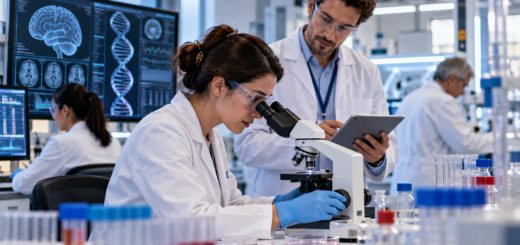
For much of scientific history, researchers studied individual parts of the planet. Meteorologists examined the atmosphere, oceanographers studied the seas, geologists investigated the ground, and biologists focused on ecosystems and species. Those disciplines remain essential, but modern research increasingly connects their findings.
NASA’s Earth science programme, for example, brings together research on oceans, climate, atmospheric dynamics, ecology, water resources, fire, the Earth’s surface and other interconnected processes. The goal is not simply to collect more information, but to combine observations into a clearer picture of how the planet functions as a system.
This approach matters because environmental changes rarely remain isolated. Rising temperatures can alter ocean circulation, affect water availability, influence ecosystems and increase pressure on agriculture or coastal environments. Understanding those relationships can be more useful than studying any single measurement on its own.
Satellites Are Turning the Planet Into a Living Laboratory
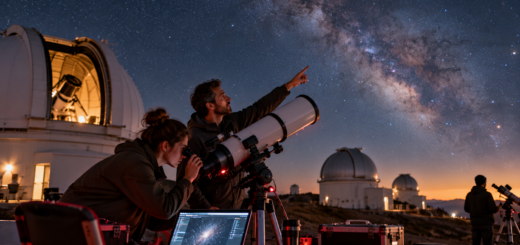
One of the biggest changes in Earth science has come from observing the planet from space. Satellites can repeatedly measure enormous areas that would be impossible to monitor using ground-based research alone.
Scientists can track changes in vegetation, ice, atmospheric composition, surface temperature, fires and oceans over long periods. These observations create enormous datasets that allow researchers to identify patterns that may remain invisible from the ground.
Modern satellites are also becoming more precise. NASA’s PACE mission, for instance, is designed to provide detailed observations of ocean colour and the microscopic organisms that form the foundation of marine food webs. Its Ocean Color Instrument can distinguish more than 200 wavelengths of light, allowing scientists to identify characteristics of different phytoplankton communities and study changes in ocean ecosystems.
That matters because the ocean is not simply a vast body of water. It is a complex biological and chemical system that influences climate, carbon cycles and food webs across the planet.
The Ocean Is Becoming a Major Focus of Climate Research
The world’s oceans absorb enormous amounts of heat and interact continuously with the atmosphere. As the planet warms, researchers are therefore paying increasing attention to changes beneath the surface as well as those visible at the coastline.
Recent research supported by NASA combined satellite observations, ocean surveys and genetic analysis of marine microorganisms to investigate nutrient stress in phytoplankton. The study found evidence that warming waters can reduce nutrient availability in parts of the global ocean, potentially affecting organisms at the base of marine ecosystems.
Other research is revealing how marine heat extremes can affect ecosystems throughout the year rather than only during the warmest season. A 2026 global assessment found that significant marine impacts occurred outside summer as well, highlighting how conventional seasonal monitoring can miss important ecological changes.
The broader lesson is important: climate change is not simply a matter of higher temperatures. It can change the timing, location and interaction of biological and physical processes.
Biodiversity Research Is Becoming More Predictive
Scientists are also developing new ways to anticipate how ecosystems may respond to environmental stress.
Traditional biodiversity research often focuses on documenting what has already happened. Increasingly, researchers want to know where risks are likely to emerge before major ecological damage occurs.
A 2026 study described a global early-warning approach that combines seasonal weather forecasts with information about species-specific temperature limits. The researchers showed how forecasts could identify species and regions likely to experience dangerous heat exposure weeks in advance, potentially giving conservation teams time to respond.
This represents a broader shift in environmental science. Data is becoming useful not only for describing the past, but also for supporting decisions about the near future.
Extreme Events Are Becoming a Data Problem as Well as a Climate Problem
Wildfires, floods, heatwaves, storms and other extreme events have always existed. What is changing is the sophistication with which scientists can observe them.
Satellites, radar systems, sensors, aircraft, ocean buoys and computer models now operate together as part of a much larger observation network. NOAA describes this infrastructure as a combination of satellites, radars, buoys, tide gauges, ships, aircraft and supercomputers used to monitor weather, climate, oceans and coastlines.
The result is a much more detailed understanding of environmental events. Researchers can compare present conditions with historical records, identify unusual patterns and improve forecasting systems.
That capability is becoming increasingly important because preparation depends on time. Knowing that an extreme event is possible is useful. Knowing where it is likely to develop, how severe it could become and which systems may be affected is far more valuable.
Climate Models Are Becoming More Integrated
Observation is only one part of the equation. Scientists also need models capable of turning huge amounts of information into explanations and projections.
Modern Earth-system models increasingly connect atmospheric processes with oceans, land, vegetation, ice and other components. Better observations provide more data for these models, while improved models help researchers determine which measurements matter most.
Artificial intelligence is also beginning to support this process by helping scientists analyse enormous datasets and identify relationships that might be difficult to detect manually. The important point, however, is not to replace scientific reasoning with algorithms. It is to give researchers better tools for working with a planet that generates vastly more information than humans could process alone.
The Next Frontier Is Understanding Interactions
The most difficult questions about Earth’s future may not involve individual systems. They may involve interactions between them.
A warming ocean can affect marine ecosystems. Changes in ecosystems can influence carbon cycles. Shifting rainfall can affect vegetation and water resources. Fires can alter landscapes and atmospheric composition. Melting ice can influence both ecosystems and coastal conditions.
Researchers are therefore moving toward a more integrated form of Earth science in which climate, biology, oceans, atmosphere and human environments are examined together.
That does not mean science can predict every detail of the planet’s future. Earth remains an extraordinarily complex system, and uncertainty will always be part of environmental research. But the quality of the evidence is changing rapidly.
Building a Better Picture of Tomorrow
The most significant development in Earth science may ultimately be the ability to connect observations that were once separated by discipline, geography and time.
A satellite image, an ocean measurement, a biodiversity survey and a climate model can now become parts of the same scientific picture. Researchers can compare changes across decades, monitor events almost in real time and increasingly search for warning signals before environmental risks become irreversible.
The future of Earth science will therefore depend not only on discovering new facts about the planet, but on learning how those facts fit together. The better scientists understand those connections, the better humanity can prepare for a world that is already changing.