The Demographic Turning Point: How Population Change Is Redefining the World
For most of modern history, the dominant demographic story was simple: the world’s population was growing, cities were expanding and more people were entering the global workforce. That story is no longer enough to describe what is happening.
The world is approaching a demographic turning point in which population growth will eventually slow, stop and begin to reverse. At the same time, people are living longer, families are generally becoming smaller and the age structure of societies is changing. These developments are happening at different speeds, creating a world where one country may be preparing for a rapidly ageing population while another is still building schools and creating jobs for a young and expanding workforce.
The United Nations now projects that the global population will rise from about 8.2 billion in 2024 to roughly 10.3 billion in the mid-2080s before gradually declining to around 10.2 billion by the end of the century. The probability that global population will peak within the current century is estimated at 80 percent.
The significance of this forecast goes far beyond the eventual population number. It signals a fundamental change in the conditions under which economies and societies will operate.
The Era of Rapid Population Growth Is Losing Momentum
Global population growth has already slowed considerably. Fertility has fallen in almost every part of the world, although the pace of change differs sharply between countries and regions.
The UN estimates that the global fertility rate was about 2.3 births per woman in 2024, down from 3.3 in 1990. More than half of countries and areas now have fertility below the replacement level of roughly 2.1 births per woman.
That does not mean the world’s population will immediately begin shrinking. Demographic change has a long delay built into it. Even when families become smaller, large generations born in earlier decades continue entering adulthood and having children of their own.
This creates what demographers call population momentum. A country can continue growing for years even after fertility has fallen substantially.
Eventually, however, the mathematics changes.
Different Parts of the World Are Moving in Different Directions
There will not be one universal demographic future.
According to the UN, the populations of 63 countries and areas, representing about 28 percent of the world’s population in 2024, had already reached their peak size. Another group is expected to reach its population peak between 2025 and 2054, while many other countries will continue growing well beyond that period.
This creates an unusual global landscape.
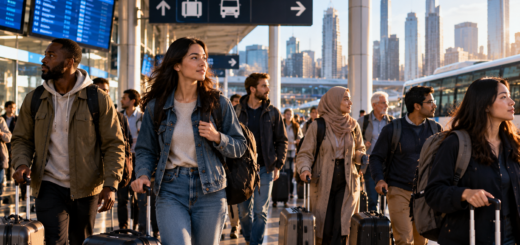
Some societies are becoming older and smaller. Others have large younger generations entering adulthood. Between them are countries moving through intermediate stages, where working-age populations remain relatively large but fertility is already declining.
The result is a demographic map that cannot be explained simply by saying that the world is ageing or that the world is growing. Both are happening at the same time, but in different places.
Ageing Is Becoming a Global Economic Issue
Longer lives are one of humanity’s major achievements. Better healthcare, improved living conditions and declining mortality have allowed people to survive into older age in much greater numbers.
But longer lives also change the structure of societies.
An ageing population means a larger share of people may eventually depend on pensions, healthcare and long-term care, while the proportion of people in traditional working ages becomes smaller.
The UN expects the number of people aged 65 and above to surpass the number of children under 18 globally by around 2080. It also projects that people aged 80 and older will outnumber infants by the mid-2030s.
These shifts will influence everything from healthcare and housing to employment and urban design.
The challenge is not simply finding ways to support more older people. Societies will also need to rethink what working life looks like when people live longer and remain capable of contributing for more years.
The Workplace Will Have to Change
Demographic change is closely connected to productivity.
When the working-age population grows quickly, economies can benefit from an expanding supply of labour. When that population begins to shrink, businesses may face greater difficulty finding workers.
That can increase the importance of productivity, technology, skills development and longer working lives.
The UN has specifically identified automation, lifelong learning, retraining and multigenerational workforces as potential tools for countries facing rapid population ageing.
This does not necessarily mean that technology will replace workers. In many ageing societies, the opposite may be true. Automation can help compensate for labour shortages by allowing smaller workforces to produce more.
Companies may also need to redesign jobs around a wider range of ages, making professional development and flexible working arrangements more important throughout a person’s career.
Young Populations Create a Different Challenge
While some societies are ageing rapidly, other parts of the world still have very young populations.
A large young population can create enormous opportunities. If young people have access to education, healthcare, infrastructure and productive employment, a country can benefit from a growing workforce and expanding consumer economy.
But the opportunity is not automatic.
A generation entering adulthood needs jobs. Without sufficient employment, economic growth can fail to keep pace with demographic expansion. Education systems must also adapt to growing demand, while cities need housing, transportation and public services.
The UN describes investment in education, health, infrastructure and decent work as essential for countries with young and growing populations.
This creates one of the central demographic questions of the coming decades: whether rapidly growing populations can turn their size into an economic advantage.
Cities Will Feel the Demographic Shift First
Population change is also transforming cities.
A younger population can generate demand for schools, affordable housing, public transport and new workplaces. An older population can create greater demand for accessible buildings, healthcare facilities, public spaces and services designed around mobility and independent living.
This means that demographic planning cannot be separated from urban planning.
A city built for a population that is growing rapidly may need to expand physical infrastructure. A city whose population is ageing or declining may instead need to adapt existing infrastructure to a different pattern of demand.
The challenge is particularly complex because demographic change does not always affect every neighbourhood equally. Even within the same metropolitan area, some districts can become younger and more crowded while others lose population and age rapidly.
Migration Can Change the Demographic Equation
International migration is another important part of population change.
Countries with ageing populations and labour shortages may attract workers from countries with younger populations. This can partially offset demographic decline, although migration alone cannot completely reverse long-term population trends.
The UN includes international migration alongside fertility and mortality as one of the three fundamental components determining population change. Its 2024 projections also incorporate probabilistic estimates of future migration.
This creates a connection between demographic trends in different parts of the world.
A shortage of workers in one economy and a growing working-age population in another can create opportunities for both, provided migration systems, labour markets and integration policies are capable of managing the movement effectively.
Consumption Patterns Will Change Too
Demography does not only influence the number of workers. It changes what people need and buy.
A younger population tends to create strong demand for education, first homes, childcare, transport and consumer goods associated with household formation. Older populations generate different patterns of demand, including healthcare, financial services, accessible housing and products designed for longer independent living.
Businesses therefore need to understand age structure as carefully as they study income or consumer preferences.
A market with fewer people can still become commercially important if those consumers have higher incomes or different needs. Conversely, a rapidly growing population may offer enormous potential but require substantial investment before that potential can translate into purchasing power.
The Meaning of Growth Is Changing
For generations, population growth was closely associated with economic expansion. More people meant more workers, more consumers and larger domestic markets.
That relationship is becoming more complicated.
Future economic growth will increasingly depend on how effectively societies use their available human capital. Education, health, productivity, technology and participation in the workforce may become more important than simply having a larger population.
This is particularly significant as countries move through different stages of demographic transition. The UN describes this transition as a broad historical movement toward longer lives and smaller families, with countries progressing through it at different speeds.
The result is a world where demographic strategy becomes part of economic strategy.
Preparing for a Different Population
The demographic transformation will unfold gradually, but its effects are already visible.
Governments are planning for older populations. Businesses are reconsidering workforce strategies. Cities are adapting infrastructure. Education systems are preparing for changing numbers of children and young adults. Migration policies are becoming increasingly connected to labour-market needs.
The most important change may be psychological. Population growth can no longer be treated as the permanent background condition of the global economy.
The world is moving toward a future of longer lives, smaller families and much greater demographic diversity between regions. Some societies will need to make the most of a young workforce. Others will need to maintain prosperity with fewer workers and more retirees.
Neither situation is inherently positive or negative. Much will depend on preparation.
Demography moves slowly, but once its direction becomes clear, its consequences reach almost everywhere. The countries and communities that understand those changes early will have a significant advantage in shaping economies, cities and institutions for the population that comes next.